
Maintenance & Prevention
Cleaning the Filter in a Bosch Dishwasher, and How Often It Really Needs It
Once a month for normal use, and every couple of weeks if you rarely rinse plates or run short cycles. The filter assembly in the floor of the tub unscrews by hand — no tools — and rinses under a tap with a soft brush and a little washing-up liquid. It takes about five minutes and it prevents the most common repair we are called out for on this brand, which is a machine that will not drain.
The full guide
How often should I clean my Bosch dishwasher filter? The part nobody was told about
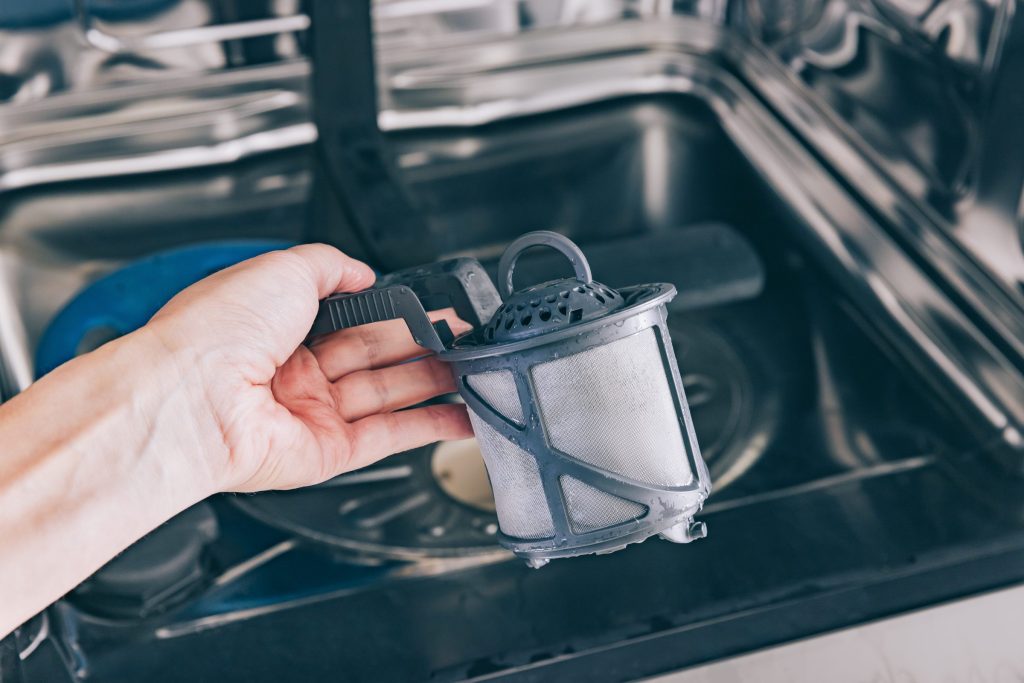
Open the door of your dishwasher and take the lower rack out. In the floor of the tub is a cylindrical plastic assembly, usually with an arrow on it.
That is the filter, and it unscrews by hand.
It needs cleaning about once a month. Almost nobody does it, because almost nobody has been told, and the single most common repair call we take on this brand is a machine that will not drain — which is what happens after a year or two of not doing it.
Why these machines have a filter at all. Older dishwashers had a grinder that chopped food waste and pumped it out. It worked and it was loud. Bosch went the other way: catch the solids in a filter you can clean, and lose the noise. The trade is five minutes a month, and it is the reason these machines are as quiet as they are.
The five-minute version
- Lower rack out.
- Twist the filter counter-clockwise and lift it out. No tools. If a tool seems necessary, see the last question below.
- Separate the parts. Most assemblies split into a cylinder and a flat mesh plate. Debris collects between them, out of sight.
- Rinse under a tap with a soft brush and a little washing-up liquid. A nail brush is perfect. Rinsing alone leaves the grease film that is doing most of the blocking.
- Lift the pump cover beside it and clear what is underneath — this is where the glass fragments and fruit stickers end up.
- Screw the filter back until it seats. Hand-tight, and make sure it turns home rather than sitting proud.
How often, honestly
- Monthly for a household running the machine most days, scraping plates before loading.
- Every two weeks if you run short or eco cycles most of the time. Those cycles are cooler, and cooler water carries less grease away — more of it stays on the filter.
- After anything unusual. A party, a roasting tray, a load with a lot of rice or pasta. Those are the loads that block a filter in one go.
What a blocked filter looks like from outside
You will usually notice one of these before you notice the filter:
- Grit on glasses and inside cups. Food that cannot leave the machine being redistributed over the load. This is the classic and it is unmistakable once you know.
- Water standing in the tub after a cycle, or draining more slowly than it used to.
- A smell when you open the door, especially after the machine has sat unused for a few days.
- A code in the twenties, or four lights flashing on a machine with no display. By then it has been blocked a while.
While you are down there
Two other things take another two minutes.
The spray arms. Spin each by hand with the racks in place. They should turn freely. If a knife handle or a baking sheet stops one, that is a cleaning problem with a loading cause. Hold an arm up to the light and look at the jets — blocked ones show immediately and clear with a toothpick.
The door seal. Run a finger along the bottom lip and into the channel. What comes off on a cloth is usually surprising, and it is where dishwasher smells live.
Both of these prevent a call rather than fixing one. Between the filter, the pump cover, the spray arms and the seal, four of the five most common things we are asked to come out for on a Bosch dishwasher are things the owner can do in ten minutes with no tools. We would rather say so.
What ends up in there, and what it tells you
The contents of a filter are a surprisingly good report on how the machine is being used.
Soft sludge, evenly spread. Normal. A month of ordinary cooking, and it rinses off in seconds.
Whole pieces of food. Plates are going in with too much on them. Scrape rather than rinse — scraping keeps the filter manageable, and rinsing tells the machine the load is clean and gets you a short cool cycle you did not want.
Grease that has set hard. The machine is not getting hot enough often enough, which on a household running eco cycles exclusively is common. One hot cycle a week changes it.
Seeds, rice, coffee grounds. Small enough to pass the coarse screen and exactly the right size to mat across the fine one. Nothing to fix; just clean it more often.
Grit and sand. Unusual, and worth mentioning to us. It sometimes points at deposits breaking loose from inside the machine rather than coming off the plates.
The mistake that puts it back wrong
The filter assembly has to seat and lock, and it turns further than people expect. If it is proud by even a couple of millimeters, debris goes past it and straight to the pump — which is how a machine that was cleaned last week arrives with a blocked drain this week.
Turn it until it stops, then check by trying to lift it. It should not move.
The same applies twice over to the drain pump cover beside it: it clicks, and a cover that has not clicked is a cover that lets the pump draw air.
What a monthly filter actually prevents
- The drain call. The most common repair we are asked for on this brand, and the one most often caused by a filter left for a year.
- Grit on the glassware, which people usually blame on detergent.
- Smells, which live in what the filter is holding.
- The pump itself. Debris that gets past a blocked filter ends up at the impeller, and clearing a jammed pump is a visit rather than five minutes.
None of that is dramatic. It is simply the difference between an appliance that gets serviced for free by its owner every month and one that gets serviced by us once a year.
If it turns out to be a repair
What this leads to, and what it costs
Every job on this site is priced the same way: an on-site diagnostic first, the figure agreed in writing before anybody starts.
-
The most common call Dishwasher not draining
Water standing in the bottom of the tub after a cycle. Two of the five causes come out by hand without tools, which makes this the symptom most worth five minutes before booking anything.
- Standing water after every cycle
- A code in the twenties, or four flashing lights
- Dishes clean on top, wet and gritty below
-
from $145 Maintenance & descaling
The visit that stops the other pages happening. In a city with hard water and a lot of heat, descaling a dishwasher and cleaning a condenser are not housekeeping — they are the two cheapest repairs on this site, done early.
- Dishwasher descaling before it costs the heat pump
- Condenser and coil cleaning
- Filters across the whole kitchen and laundry
-
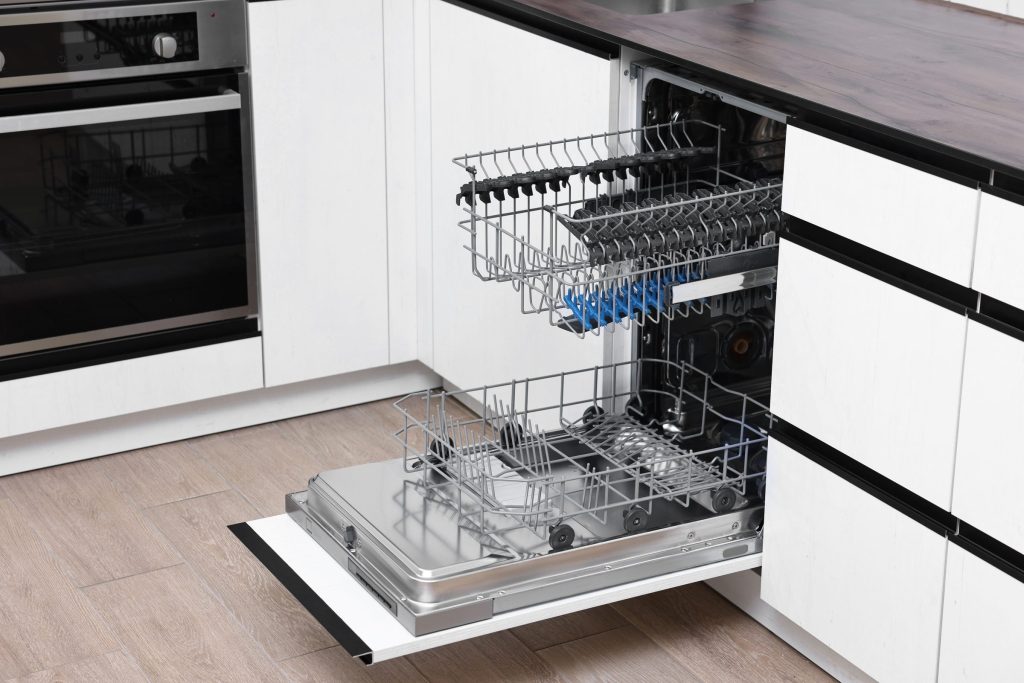
100 · 300 · 500 · 800 · Benchmark Dishwashers
The appliance this brand is known for, and the one we are called out to most. Bosch dishwashers dry with condensation rather than a heating element and protect themselves with a leak sensor in the base, so two of the commonest complaints about them are the design working as intended — and two more are not.
- Water left standing in the tub
- E15 and the leak protection tripping
- Plastics coming out wet

Questions people ask about this
Should I rinse plates before loading?
Scrape, do not rinse. These machines sense how dirty the water is and adjust the cycle accordingly — a rack of pre-rinsed dishes gets a short, cool cycle, which is the opposite of what a genuinely dirty load needs. Scraping the solids off is enough, and it is what keeps the filter manageable.
There is grit on my glasses. Is that the filter?
Almost certainly. A blocked filter cannot hold food out of the water, so it gets redistributed over the load. Grit is the filter; a white haze is scale, which is a different job entirely.
How do I know if I have left it too long?
By what comes out. A filter cleaned monthly has a little debris on it. One cleaned annually comes out with a mat of material across the mesh and a smell — and by then the machine has been draining slowly for a while.
Can the filter go in the dishwasher?
There is a certain logic to it and no, not usefully. The film that blocks the mesh is grease, and it needs mechanical help — thirty seconds with a brush does what a full cycle cannot.
Mine will not unscrew.
It has probably been left long enough for the deposits to grip. Run a hot empty cycle first to soften everything, and try again. If it still will not move, stop rather than forcing it — the assembly is plastic and it breaks before it gives.
Maintenance & Prevention
More guides like this one
-

Descaling a Bosch Dishwasher in South Florida’s Hard Water
This is the one piece of maintenance the machine publishes an error code for, which tells you how seriously the manufacturer takes it. Acting on that code is a service. Ignoring it for a year is the most expensive part in the dishwasher.
Read more -
Keeping a Bosch Washer Clean in a Closet That Never Dries Out
A front loader in a humid, unventilated laundry closet is the hardest case there is for a door seal — and this is a genuinely local problem. The drum cycle, the seal, the drawer, and the pump filter nobody has ever opened.
Read more -
Cleaning a Bosch Range Hood Filter, and the One Most Owners Do Not Know About
Grease filters wash. Charcoal filters do not, and they are a consumable — which matters because in a South Florida condo the hood almost certainly recirculates, and then the charcoal filter is the whole system.
Read more
Tell us the model number and what it is doing.
This article is based on:
- Official manufacturer documentation
- Internal repair procedures
- Technician repair history
- Company quality standards