Maintenance & Prevention
Keeping a Bosch Washer Clean in a Closet That Never Dries Out
Run the drum cleaning or hottest cycle empty once a month, wipe the door seal after every wash or two, rinse the detergent drawer every few weeks, and open the pump filter behind the flap at the bottom front every three months. In a humid closet, leave the door and the detergent drawer ajar between washes — that single habit prevents most of the smell and most of the mold this climate produces.
The full guide
How often should I clean my Bosch washing machine? Why this is a South Florida page
A front-loading washer holds a little water by design — in the sump, and in the fold of the door seal. That is intentional: it keeps the seals from drying out and cracking.
In a ventilated laundry room in a dry climate, it evaporates between washes and nothing happens.
In a closed closet off a hallway in Miami, with the door shut, no window, and the air already at seventy percent humidity, it does not evaporate at all. Add detergent residue and the lint from every wash, and you have exactly the conditions biofilm needs.
That is why a machine that behaved perfectly somewhere else starts to smell here, and it is why this page is about a climate as much as an appliance.
One habit is worth all the products. Leave the door and the detergent drawer ajar between washes. An inch is enough. In a closed closet it is the difference between a machine that smells and one that does not, and it costs nothing.
The monthly cycle
Most of these machines have a drum cleaning program. If yours does not, use the hottest cottons cycle. Empty — no laundry, no towels "to give it something to work on".
Once a month. A hot empty cycle does more for the inside of a washing machine than any additive, because the problem is a film that needs heat and time rather than a chemical.
If the machine has a maintenance reminder — some display a drum-with-a-droplet icon — that is what it is asking for, and it is worth doing when asked rather than when noticed.
The door seal
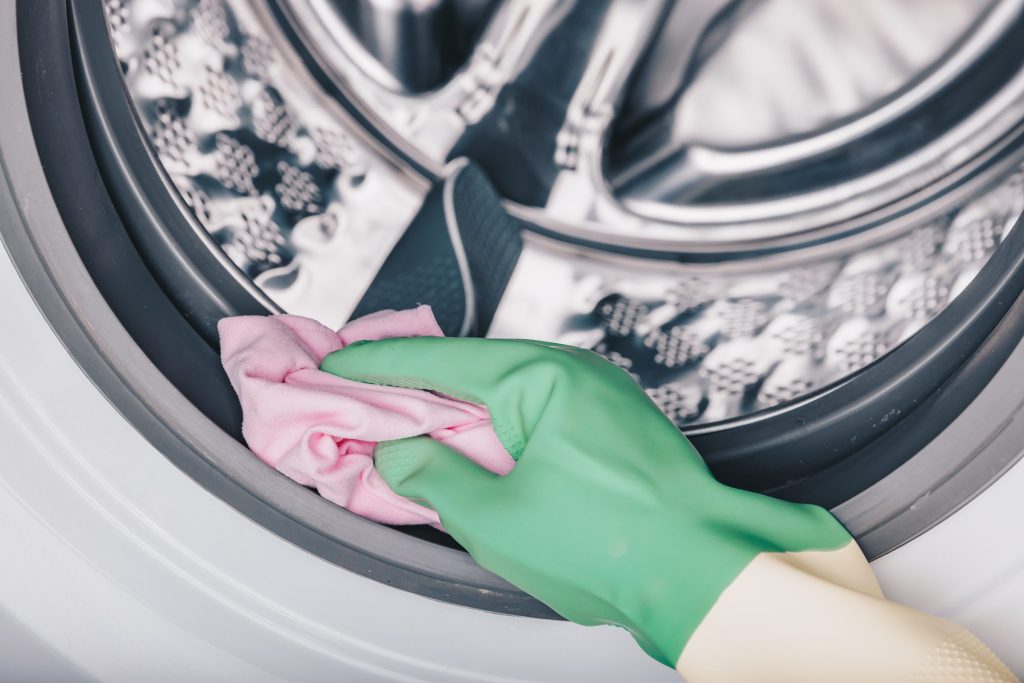
This is where the smell actually lives.
Pull the rubber fold back gently, all the way around, and wipe it with a cloth. What comes out is water, hair, tissue that went through a pocket, and detergent residue — and in that combination, in this climate, it grows.
Do it after every wash or two. It takes fifteen seconds and it is the single most effective piece of maintenance on the machine after the hot cycle.
When the seal is finished: if there are black spots that no longer come off, the mold is in the rubber rather than on it. Cleaning will not reverse that. It is a modest repair, and it is worth doing before the seal starts leaking as well as staining.
The detergent drawer
Pull it right out — there is a catch, usually in the middle of the softener compartment, that releases it.
Rinse the drawer under a tap and brush out the housing it came from. Both collect a grey sludge of undissolved detergent and softener, and the housing is the half nobody thinks of.
Leave the drawer open an inch between washes for the same reason as the door.
The pump filter nobody has opened
Behind the flap at the bottom front of the machine is a filter with a short drain spout beside it.
Unplug the machine. Put a shallow tray under the spout with a towel under that, and let the water out — there is more in there than you expect and it comes fast. Then unscrew the filter and clear it.
Coins, hair grips, buttons, underwiring, and lint. Every three months, and most machines in this market have never had it opened.
It is not an optional extra. A pump filter left long enough is how a healthy pump ends up blocked, and a blocked pump is the most common repair we are called out for on these machines. Five minutes, four times a year.
Detergent, briefly
Use less. Then use less again.
A 24-inch high-efficiency drum needs a fraction of what a bottle designed for a full-size American machine suggests. Excess does not rinse away — it stays in the seal and the drawer, and it is food for exactly the film this page is about.
These machines even have an error code for it: the control detects excessive foam and stops the cycle. If you have seen that code, the machine has already told you the answer.
Why the machine cannot clean itself
Three design decisions, all reasonable individually, add up to a machine that needs help in this climate.
It washes cold. Modern detergents are formulated for it and it saves a great deal of energy. It also means the machine's own plumbing — the sump, the hoses, the pump housing — never sees water hot enough to melt grease off itself.
It uses very little water. Excellent for a utility bill, and it means less flushing of anything that stays behind.
It holds water on purpose. In the sump and the seal fold, to keep the rubber from drying and cracking.
In a ventilated laundry room in a dry climate, none of that matters. In a closed closet at seventy percent humidity, it is a specification for growing biofilm — which is why the monthly hot cycle is not optional here, whatever the machine did somewhere else.
What to run in the monthly cycle
Nothing, in most cases. An empty drum on the hottest cycle is the treatment; the heat and the time are what does the work.
If the machine already smells, a purpose-made washing machine cleaner on that cycle deals with what has established itself. After that, plain hot cycles keep it there.
What not to use: bleach as a routine, for the same reason as on the seal — it is hard on rubber, and the rubber is what keeps the water inside the machine.
The four-minute quarterly
Worth doing as one job rather than four:
- Pump filter at the bottom front. Unplug, tray, towel, unscrew, clear, refit.
- Detergent drawer out, rinsed, and the housing brushed.
- Seal fold wiped all the way round, corners included.
- Inlet screens at the tap end of the hoses, cleaned with a small brush with the tap off. In this water they block, and a blocked screen shows up as a machine that will not fill.
Fifteen minutes, four times a year, and it covers most of what we are called out to on these machines.
The one that is not maintenance
If the machine has stopped and reported water in its base, no amount of cleaning is relevant. That is the leak protection, it has done its job, and the thing to do is turn the tap off and leave it off. In a laundry closet above somebody else's ceiling, that lockout is the most valuable feature the machine has.
If it turns out to be a repair
What this leads to, and what it costs
Every job on this site is priced the same way: an on-site diagnostic first, the figure agreed in writing before anybody starts.
-

There is a filter you can open Washer not draining
A cycle that stops with water in the drum, or clothes left soaking because the machine never got to the spin. There is a pump filter behind a flap at the front of these machines, and almost nobody knows it is there.
- Cycle stops with water in the drum
- Will not spin because it has not drained
- A code beginning E:30 or E:36
-
from $145 Maintenance & descaling
The visit that stops the other pages happening. In a city with hard water and a lot of heat, descaling a dishwasher and cleaning a condenser are not housekeeping — they are the two cheapest repairs on this site, done early.
- Dishwasher descaling before it costs the heat pump
- Condenser and coil cleaning
- Filters across the whole kitchen and laundry
-
24" compact · stackable Washers
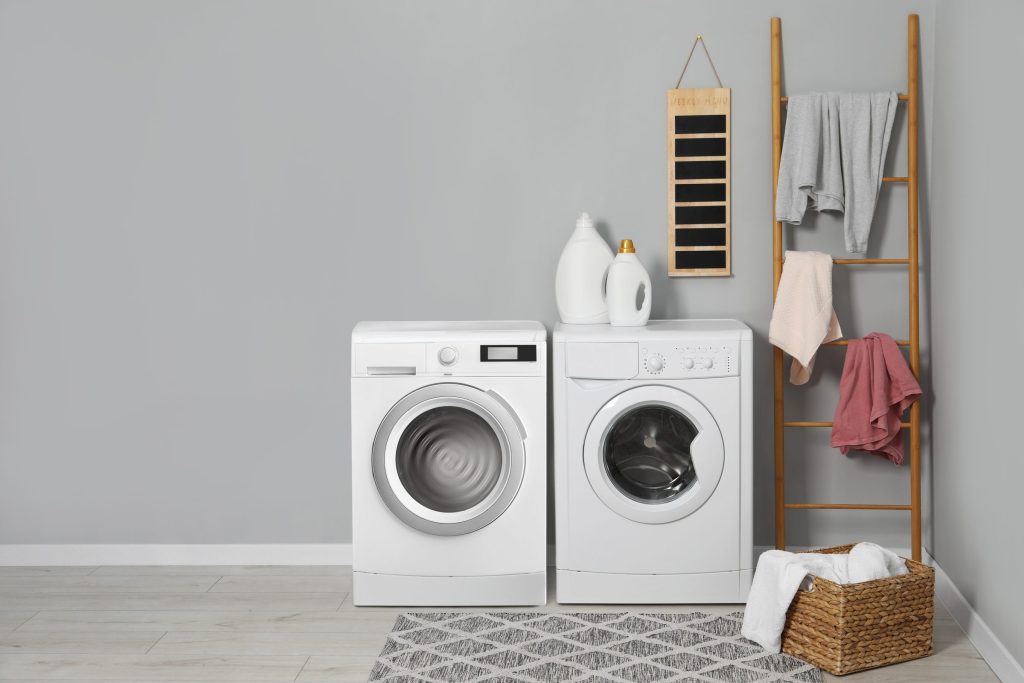
Bosch laundry in this market is almost always the 24-inch compact pair, stacked in a closet or tucked under a counter. That is a different machine from a full-size American washer and a different job to reach — and it is why so much of what we are called out to here is a drain, a filter or a load that will not balance.
- Will not drain or will not spin
- Stopping mid-cycle on a code
- Walking, banging or refusing to balance
Questions people ask about this
Why does my washer smell when I never had this problem before?
Two things together: front loaders keep a small amount of water in the seal and the sump by design, and modern detergents work at lower temperatures than the ones the design assumed. Add a laundry closet in South Florida with no ventilation, and biofilm grows where nothing ever dries.
Can I use bleach?
Sparingly on the seal, on a cloth rather than poured in, and never as a routine. It is hard on the rubber and on the seals downstream. A hot empty cycle with a proper washing machine cleaner does the job with none of the risk.
How much detergent should I actually use?
Considerably less than the bottle says, and less again on a 24-inch drum. Excess detergent does not rinse out, it feeds the biofilm in the seal, and on these machines it has its own error code — the machine detects the foam and stops.
What is in the pump filter?
Coins, hair grips, buttons, the underwiring from bras, and a great deal of lint. It is designed to be opened by the owner and it is in the manual. Three months is a reasonable interval and most machines here have never had it opened at all.
Do I need to leave the door open? It looks untidy.
In a ventilated laundry room, it helps. In a closed closet in Miami, it is the single most effective thing on this page. A gap of an inch is enough — it does not have to stand wide open.
Maintenance & Prevention
More guides like this one
-

Descaling a Bosch Dishwasher in South Florida’s Hard Water
This is the one piece of maintenance the machine publishes an error code for, which tells you how seriously the manufacturer takes it. Acting on that code is a service. Ignoring it for a year is the most expensive part in the dishwasher.
Read more -

Cleaning the Filter in a Bosch Dishwasher, and How Often It Really Needs It
Five minutes, no tools, once a month. It prevents the most common repair call this brand generates — and most owners have never been told the filter exists.
Read more -
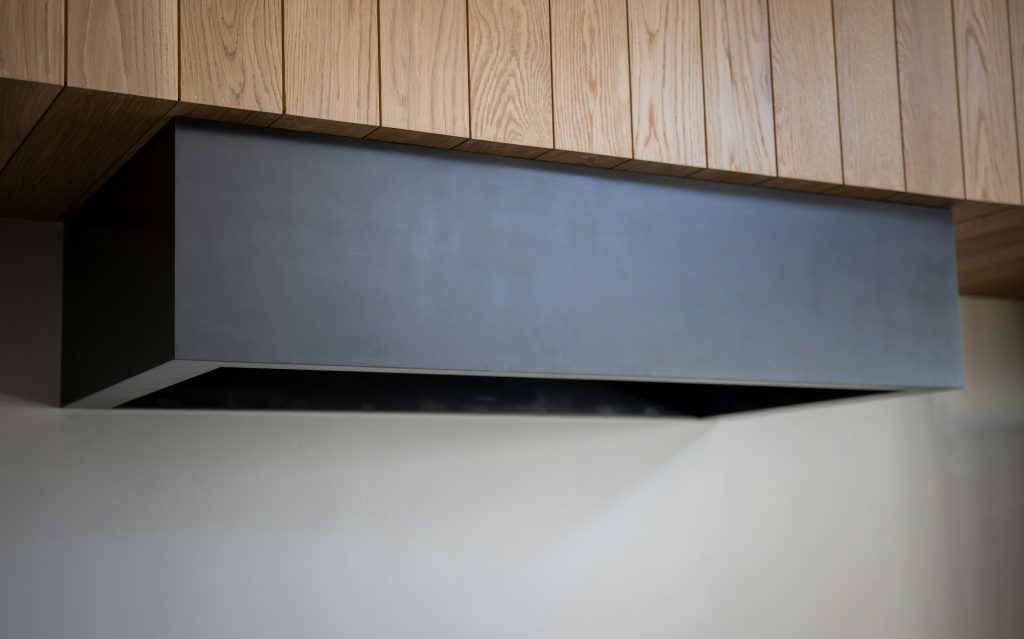
Cleaning a Bosch Range Hood Filter, and the One Most Owners Do Not Know About
Grease filters wash. Charcoal filters do not, and they are a consumable — which matters because in a South Florida condo the hood almost certainly recirculates, and then the charcoal filter is the whole system.
Read more
Tell us the model number and what it is doing.
This article is based on:
- Official manufacturer documentation
- Internal repair procedures
- Technician repair history
- Company quality standards