
Cost Expectations
What Each Bosch Error Code Actually Costs to Fix
A published code names a circuit rather than a component, so a code maps to a range rather than a price. E22 and the drain codes in the twenties are frequently the visit alone, because the filter and pump cover come out by hand. E12 is descaling, which is maintenance. E15 is leak protection and the cost depends entirely on what was leaking. E09 and its relatives point at the heat pump, which is the most expensive part in the machine. E27 is about your building's voltage rather than the appliance at all.
The full guide
Bosch dishwasher E15 repair cost, and why nobody answers this question properly
Search any Bosch code with the word "cost" after it and you get pages that either avoid the number entirely or give one that cannot be right.
The reason is structural. This manufacturer publishes what its codes mean — and what it publishes is a circuit, not a component. One code, several possible causes, and they are not close together in price.
So the honest version of this page is a code mapped to a *range*, with the cheap end and the expensive end named, and the thing that separates them stated. That is what follows.
One thing first, and it is free. Photograph the display before you clear anything. Codes vanish when a machine is reset, and on the newer machines there is a second group of numbers that is the half that actually narrows the problem.
The dishwasher codes people actually search
E22 — the filter
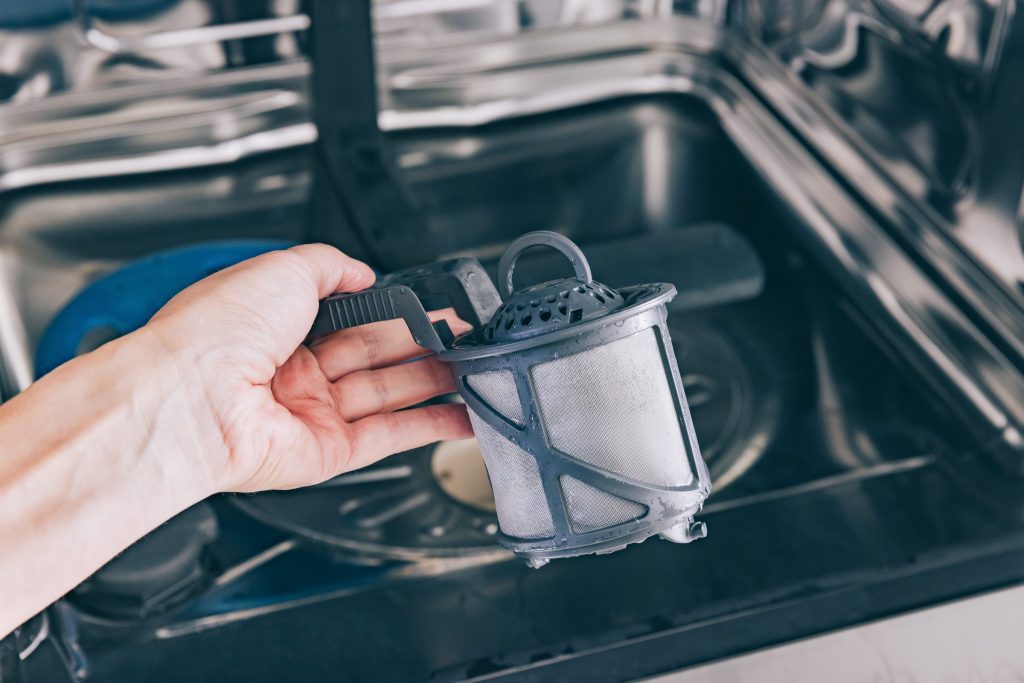
The filter in the floor of the tub is blocked. It unscrews by hand, rinses under a tap, and goes back in five minutes.
Cost: usually nothing. If we come out for it, the visit — and we will show you how so it does not happen again.
E24, E25 and their four-digit twins
The machine cannot get water out. Five causes: the drain pump cover, a kinked hose, a blocked air gap, a disposal knockout plug that was never punched out, and the pump itself.
Cost: the visit at the low end, a drain pump at the high one — published ranges put that part at roughly $100 to $250 with labor. Four of the five causes need no part at all.
The same condition shows as E25, E6102, E61-03 or four flashing lights, depending on how old the machine is.
E15 — leak protection
A sensor in the base pan has found water and locked the machine out. This is the protection working; the cost is whatever was leaking.
Low end: a hardened door seal. Middle: a hose connection or a weeping inlet valve. High end: a cracked sump, which is a larger job.
Turn the water off at the valve under the sink while you wait. And do not tip the machine backwards to clear the lockout — it drains the pan, resets the code, and repairs nothing.
E12 — scale in the heat pump
Not a repair at all. The machine is telling you it needs descaling, which is a maintenance visit and one of the cheapest things on this site.
Cost: a service. Ignored for a year it becomes the entry below, which is the most expensive part in the machine. That is the whole argument for acting on it.
E09, E20 and the heat pump family
The heater inside the heat pump. On these machines circulation and heating are one sealed assembly, so a failure in either replaces both.
Cost: the top of the dishwasher range, and the point where the series matters — the same part on an entry-series machine can approach what the machine is worth, and on an upper-series one rarely does.
Worth asking about scale first: a heat pump struggling to heat in hard water is sometimes a heat pump full of scale.
E06 — the door sensor
The machine cannot confirm the door is shut. Half of these are the door rather than the switch — a rack pushed out slightly, a tall handle fouling the seal.
Cost: nothing, or a modest part.
E27 — supply voltage
The voltage reaching the machine is too low. This one is not an appliance repair at all. No part inside the dishwasher changes it, and if it repeats the person to call is an electrician.
The laundry codes, briefly
The washers write their codes with a colon and a second group of numbers, and the second group is the half that decides the price:
| Code | What it is | Where it sits |
|---|---|---|
E:36 variants | Drain pump blocked | Often the visit — the filter is owner-serviceable |
E:30 / -10 | Water not arriving | Free to check: tap, inlet screens, hose |
E:30 / -80 | Water not leaving | Hose, standpipe, outlet height — usually installation |
E:30 / -20 | Too much detergent | Free, and a habit rather than a repair |
E32 / H:32 | Unbalanced load | Not a repair. Protection working |
E80 | Drive circuit | A real repair, and a technician job |
E:00 / -23 | Water in the base | Depends on the leak — turn the tap off first |
The one thing all of these have in common
The code gets you to the right page in about ten seconds, which is genuinely useful and better than most brands manage.
What it cannot do is tell you which end of the range you are at — and on nearly every code above, the two ends are separated by whether something needs cleaning or something needs replacing. That is what a diagnostic settles, and it is why ours is credited toward the work rather than added to it.
Why the four-digit codes exist at all
Worth a paragraph, because it explains why searching your code sometimes returns nothing.
Older machines used a short two-digit set — E15, E24, E09. Newer control platforms use a longer one — E3100, E6103, E2030 — with more room to be specific. The conditions did not change; the numbering did.
That means two things practically. A four-digit code with no results is usually findable under its two-digit equivalent, which is what the list on our error codes page pairs up. And a machine with no digital display says the same things with lights, which is not a lesser signal — the manufacturer publishes the mapping, and on that machine the lights are the code.
The codes that mean stop rather than book
Three, and they are worth separating from the price question entirely:
A leak code. Turn the water off at the valve. The cost conversation can wait; the machine has already decided it is cheaper to stop than continue.
A heating-circuit code on a dryer. The manufacturer says technician, and we agree with that one.
A drive-circuit code on a washer. Same.
Everything else on this page can wait until somebody has read it properly.
Where the range comes from, so you can check ours
Every figure quoted here traces to national cost aggregators — HomeGuide, Angi, Fixr and their equivalents — narrowed by what the part actually is on this equipment. They are published, they are checkable, and where our figure sits above one of them we say why.
The one place we deliberately disagree with the published range is dryer heating parts: the aggregators assume a generic element at $15 to $35, and Bosch OEM heating components are quoted at $210 to $234 on their own. That does not make the repair unreasonable — it makes a general cost guide read low for this brand, and we would rather say so than let the invoice do it.
If it turns out to be a repair
What this leads to, and what it costs
Every job on this site is priced the same way: an on-site diagnostic first, the figure agreed in writing before anybody starts.
-
from $145 Dishwasher drain repair cost
What it costs to get a dishwasher draining again — and how often it turns out to cost nothing but the visit, because the filter and the pump cover come out by hand.
- Published range $100–$250 for a drain pump
- A blocked filter costs the visit and no more
- The pump is usually a same-visit part
-
from $220 Dishwasher heating and drying repair cost
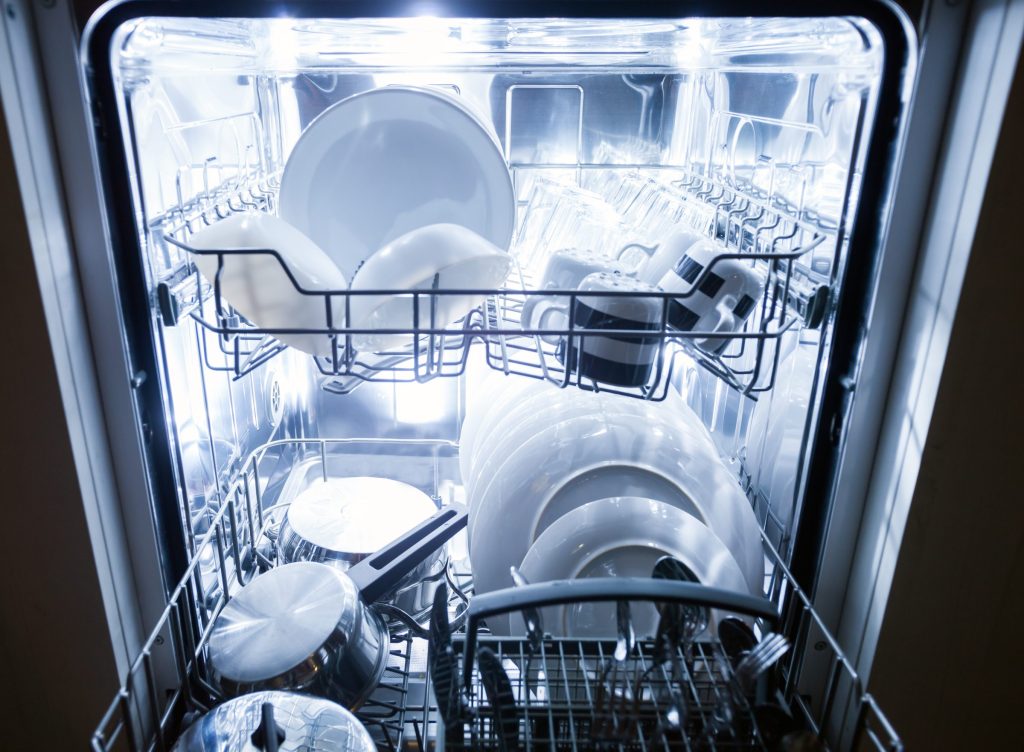
What it costs when a dishwasher is not getting hot — and why the most common version of "it is not drying" on this brand costs nothing at all.
- Wet plastics is the design, not a repair
- Descaling first where the machine has asked for it
- The heat pump is the expensive end of the machine
-

The machine may lock itself out Dishwasher leaking
Water on the floor, or a machine that has stopped and refuses to start. The leak protection on these dishwashers catches water in the base before it reaches your kitchen — which is why the first sign is usually a machine that will not run rather than a puddle.
- Machine dead with a leak code showing
- Water at the front edge of the door
- A damp cabinet base with no visible puddle
Questions people ask about this
Why can you not just give a price per code?
Because a published cause names a circuit. The drain code covers a blocked filter, a loose pump cover, a kinked hose, an air gap and a disposal plug that was never punched out. Four of those five are not a repair, and a price per code would have to assume the fifth.
My machine shows E15 and will not do anything.
The leak protection has tripped: a sensor in the base pan has found water and shut the machine down deliberately. Turn the supply off at the valve under the sink. The cost is whatever was leaking — a door seal at the low end, a cracked sump at the high one.
The code has four digits and I cannot find it anywhere.
The newer machines use a four-digit set for the same conditions the older ones show as two digits. E6103 and E25 are the same drain condition; E3100 and E15 are the same leak. Search the two-digit equivalent and you will find far more.
Is there a code that means the machine is finished?
Not on its own. Even the heat pump codes are a part rather than a verdict — what makes a machine not worth repairing is that part's price against that machine's value, which depends on the series. You get that comparison on the visit.
It cleared after I cut the power. Do I still need somebody?
Maybe not, and it is worth waiting a cycle or two to find out. A code that clears and stays clear was a transient state. One that returns is reporting something real, and now you know that for the price of five minutes.
Cost Expectations
More guides like this one
-
What It Costs to Fix a Refrigerator That Is Not Cooling
Five causes, an order of magnitude apart, and the cheapest is the most likely. What separates a condenser clean from sealed system work — before anybody quotes either.
Read more -
What an Appliance Service Call Costs in South Florida, and What It Buys
The market rate here, what a credited diagnostic actually means, and how to read the two kinds of quote that arrive without one — the padded figure and the one nobody intends to honor.
Read more -
Is It Worth Repairing a Bosch Washing Machine? How the Math Actually Works
A 24-inch compact washer inverts the usual advice: it costs more to replace than a full-size machine and less than most to repair. Bearings are the line where that stops being true.
Read more
Tell us the model number and what it is doing.
This article is based on:
- Official manufacturer documentation
- Internal repair procedures
- Technician repair history
- Company quality standards