Safety & Risks
Can a Kitchen Appliance Start a Fire? The Honest Answer, and What Storm Season Changes
It is rare and it is not zero. The conditions that account for most of it are a dryer running with restricted airflow, a control board or relay damaged by a surge, a connection that has loosened and is now heating, and a compressor's start components failing. An appliance switched off at its own control is still connected to the supply, so 'switched off' is not the same as isolated. The signs worth stopping for are a burning or hot-plastic smell, a breaker that trips when the appliance runs, visible scorching at a plug or terminal, and an appliance that is hot where it has never been hot.
The full guide
Can a switched off appliance start a fire? The honest framing
Kitchen and laundry appliances cause a small number of house fires every year. Compared to how many appliances there are and how continuously they run, the risk is genuinely low — and it is not zero, and it clusters in conditions that can be recognized.
This page is about those conditions rather than about alarm. Three quarters of it is things you can check yourself in ten minutes.
"Switched off" is not "isolated". An appliance turned off at its own control is still connected to the supply. The board is powered in standby, the terminals are live, and a connection that has worked loose is still carrying current through a poor joint. When the advice on this page says cut the power, it means at the breaker or at the plug.
The four signs that mean stop today
A burning smell, or hot plastic. Insulation, a winding, or a connection getting hotter than it should. Not a wait-and-see.
A breaker that trips when the appliance runs. The protective device is working. Resetting it to finish the cycle is the mistake — something is drawing current it should not, and on an oven that is usually an element that has failed to earth.
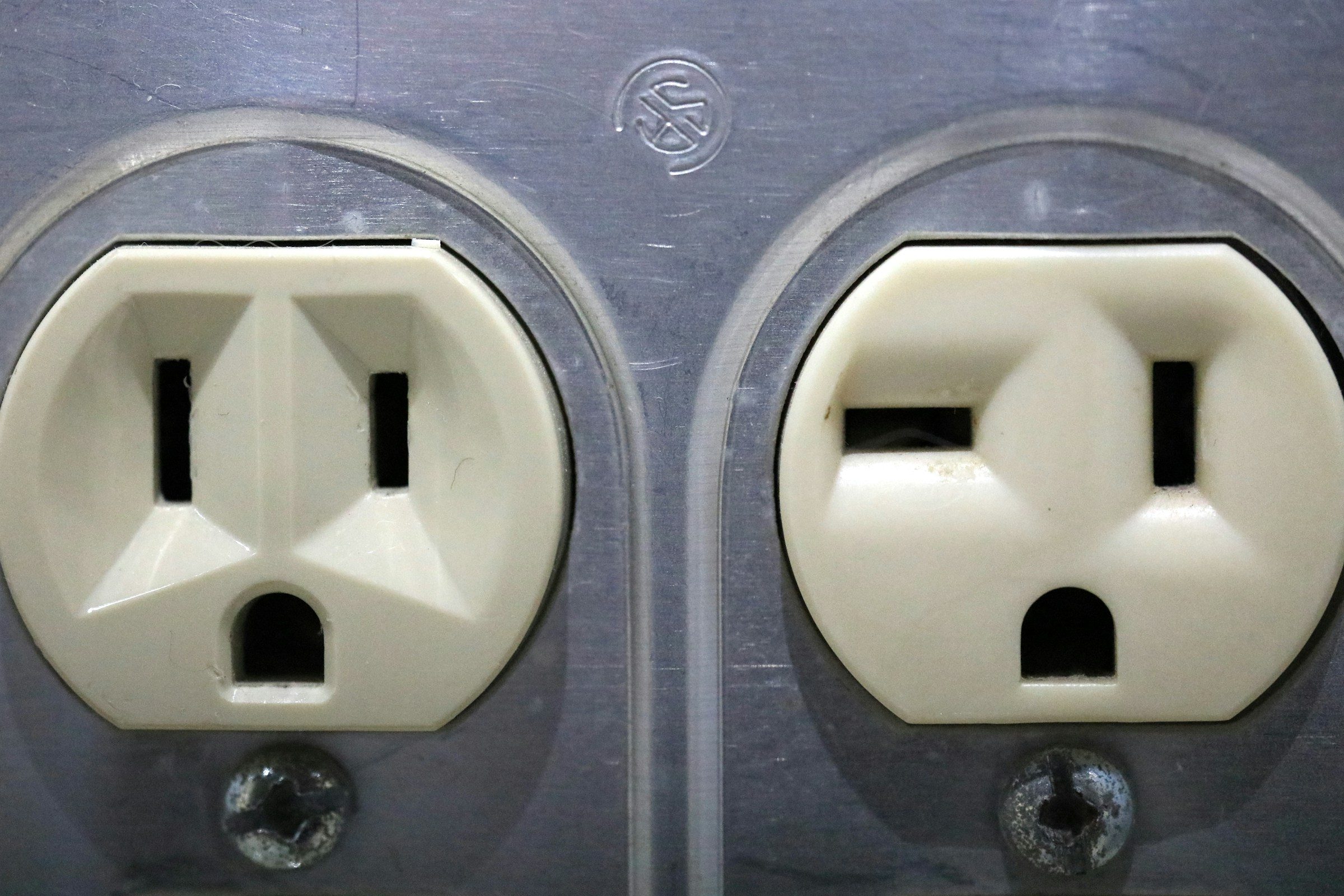
Scorching or discoloration at a plug, a socket, or a terminal block behind the appliance. Brown staining around a pin means heat has been made there over time.
Heat where there has never been heat — a warm plug, a hot patch on a cabinet side, a control panel that is unusually warm to the touch.
Any of those: cut power at the breaker, and book rather than experiment.
Where the real risk actually sits
A dryer with restricted airflow
The most consequential condition on this list, and the most preventable.
A dryer works by pushing heat through a load. When the air cannot move — a lint filter sealed with fabric softener film, a blocked secondary filter, a condenser unit nobody has rinsed — the heat has nowhere to go and the machine runs hot with lint sitting in it.
A ventless machine has an advantage here: there is no long duct through the building packed with years of lint. The filters are still there and still block, and the answer is the same. Clean every filter, and test the lint filter under a tap — water should pass straight through it.
A board or a relay damaged by a surge
This is the local one. Storm season here brings the sag before an outage, the surge on restoration, and sometimes several rapid on-off cycles while the grid decides.
Most of what that produces is a confused control that clears with five minutes at the breaker. Some of it is real damage, and damaged power electronics can fail hot rather than simply failing.
An appliance that came back from an outage behaving oddly is usually fine after a proper reset. One that came back smelling of anything is worth taking seriously.
A connection that has loosened
Vibration, thermal cycling and time all loosen terminals. A loose connection carries the same current through a smaller contact area and makes heat doing it, which is why scorching at a terminal is a warning rather than a cosmetic issue.
Common at the terminal block of a hard-wired appliance, and at the plug of anything on a heavy load.
Compressor start components
A refrigerator's relay and overload protector fail with age, and a compressor that keeps trying to start against a failed relay is a component working hard in a small, enclosed space.
Usually it announces itself first: clicking every few minutes, a compressor that hums and stops, a cabinet that is not holding temperature.
What actually reduces the risk
- Clean the dryer filters properly. Not rinsed — scrubbed, and tested under a tap.
- Do not reset a tripping breaker to finish a job. Ever.
- Fit a whole-house surge device at the panel. For hard-wired appliances it is the only version of surge protection that exists, and in this market it is a reasonable thing to ask an electrician about.
- Give appliances the ventilation gap the instructions specify. A cooktop suffocating under a full drawer is the same story on a smaller scale.
- Act on smells. Everything on this page announced itself before it mattered.
And the thing that is not a risk: a refrigerator that clicks every few minutes, a dishwasher that hums between phases, an oven that ticks as it cools. Appliances make noise. What matters is heat, current and smell, and none of those three are subtle once you know to look for them.
If it turns out to be a repair
What this leads to, and what it costs
Every job on this site is priced the same way: an on-site diagnostic first, the figure agreed in writing before anybody starts.
-
from $310 Control board replacement
The repair we most want to rule out before doing. A board is the expensive part on most of this equipment, and a good share of the symptoms that point at one turn out to be a sensor, a harness or a power supply instead.
- Confirmed before it is condemned
- Power supply and harness checked first
- OEM boards on order against the model
-

Air first, then heat Dryer not heating
A dryer that runs cool, or one that stops with a heating code. On a condensation dryer, a blocked air path imitates a dead heating element closely enough that it is always checked first.
- Runs a full cycle, clothes still damp
- No warmth at all in the drum
- Stops early with a code
-
from $95 Diagnostic visit
We read the code, reproduce what the appliance is doing, and check the cheap causes before anything expensive is proposed. The fee is credited toward the work when you go ahead.
- Codes read and reproduced on site
- The inexpensive causes checked first
- Credited toward the repair
Questions people ask about this
Can an appliance that is switched off really be a risk?
Switched off at its own control is not the same as disconnected. The supply is still present at the terminals, the board is still powered in standby, and a connection that has loosened is still carrying current through a bad joint. It is a small risk and it is the reason 'cut the power at the breaker' is the advice rather than 'turn it off'.
My breaker trips when the oven heats. Is that dangerous?
The breaker is doing exactly what it exists to do, which is the good news. What is not good news is resetting it repeatedly to finish cooking — something is drawing current it should not, usually a heating element that has failed to earth, and the protective device is the only thing standing between that and a real problem.
Is a ventless dryer safer than a vented one?
In one specific way, yes: there is no long duct full of lint running through the building. The lint is still there, in the filters and the condenser unit, and a machine running with those blocked is running hot with restricted airflow — which is the same underlying condition. Clean them.
Should I unplug appliances during a storm?
Where it is practical, it is not a bad instinct — the damage tends to come from the surge on restoration rather than the outage itself. For hard-wired appliances the equivalent is switching them off at the breaker, and the durable answer is a whole-house surge device fitted at the panel.
How would I know a board took a surge if the appliance still works?
Sometimes you would not, immediately. What people notice is behavior that is subtly wrong afterwards, or a faint hot-electronics smell. If an appliance came back from an outage smelling of anything, that is worth acting on rather than filing under 'it has been through a lot'.
Safety & Risks
More guides like this one
-

Is Vinegar Safe in a Bosch Dishwasher? What It Does to the Seals
The internet's favorite dishwasher remedy, tested against what the machine is actually made of. Where vinegar genuinely helps, where it does slow damage, and what to use instead in hard water.
Read more -
Mold on a Door Seal: Cleaning It, and Why It Comes Back Here
In this humidity it is a climate problem rather than a housekeeping failure, and it happens on a washer seal more often than a refrigerator one. How to clean it, what not to use, and the point at which the seal is finished.
Read more -
How Long Food Stays Safe When the Power Goes Out in South Florida
Four hours in the refrigerator, forty-eight in a full freezer — and both of those assume a house at room temperature, which is not what an August outage here looks like. What to do before, during and after.
Read more
Tell us the model number and what it is doing.
This article is based on:
- Official manufacturer documentation
- Internal repair procedures
- Technician repair history
- Company quality standards