Safety & Risks
How Long Food Stays Safe When the Power Goes Out in South Florida
A closed refrigerator keeps food safe for about four hours, a full freezer for about forty-eight and a half-full one for about twenty-four. Those are USDA figures for a house at normal room temperature; in a South Florida house without air conditioning in August, assume less. The single biggest factor is the door — every opening resets the clock. When power returns, check temperatures with a thermometer rather than judging by feel, and discard anything that has been above 40°F for more than two hours.
The full guide
How long is food safe in fridge without power? The numbers, and the asterisk on them
The figures everybody quotes come from the USDA and they are worth knowing:
- Refrigerator: about four hours, with the door kept shut.
- Full freezer: about forty-eight hours.
- Half-full freezer: about twenty-four.
The asterisk is that those assume a house at normal room temperature. A South Florida house without air conditioning in August is not that. The kitchen climbs into the high eighties within a few hours, the appliance is losing heat to a warmer room than the figures assume, and every one of those windows shortens.
Treat them as optimistic and plan for less.
The door is the whole game. A closed refrigerator is a well-insulated box. An opened one is a box that has just exchanged its cold air for kitchen air, and the clock starts again. Decide what you need before you open it, take it all at once, and close it.
Before the season
Two things, and neither costs anything.
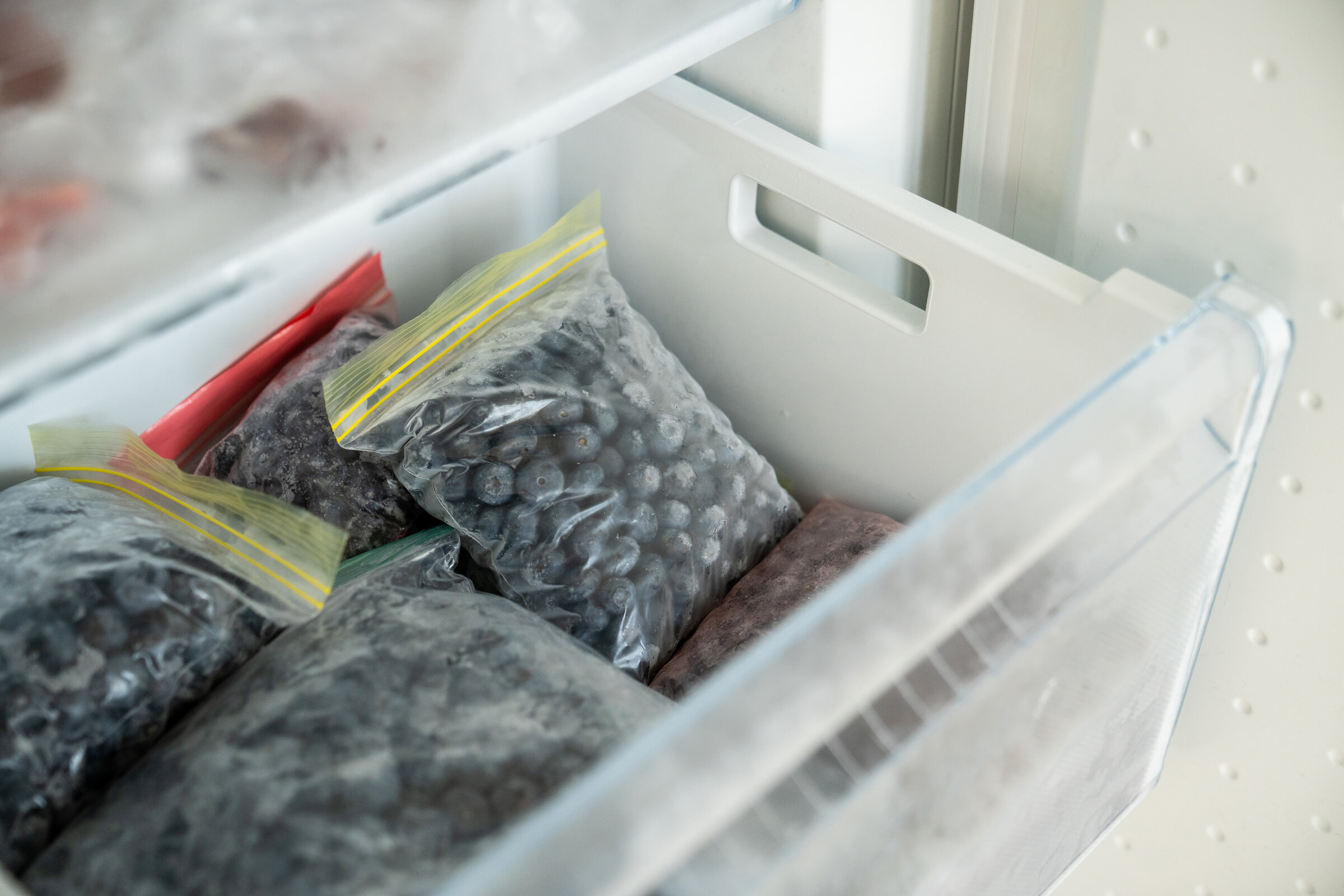
Freeze water in containers and keep them in the freezer. They fill the empty space — a full freezer holds its temperature twice as long as a half-empty one — and if the power goes out, they migrate to the refrigerator as ice packs.
Put a thermometer in each compartment now. Not for the outage; for after it. When the power comes back you will want to know whether the food went above 40°F, and by then guessing is all you have left.
There is a well-known version of this with a cup of frozen water and a coin on top: if the coin has sunk to the bottom, the freezer thawed completely while you were away and refroze. It works, and it answers a question you cannot otherwise answer about a house you were not in.
During
- Keep both doors shut. Everything else is secondary.
- Move refrigerator food into the freezer if there is room, early, in one opening.
- Ice helps. Bags of ice in the fresh food compartment; dry ice in the freezer if you can get it — roughly fifty pounds holds a full freezer for about two days. Gloves, and never in a sealed space.
- Do not run a generator indoors, in a garage, or near a window. That is not an appliance point and it is the most dangerous thing on this page.
After
Read the thermometers before you open anything else.
- Anything in the refrigerator that has been above 40°F for more than two hours goes. Meat, poultry, fish, dairy, eggs, cooked leftovers, cut fruit, soft cheeses.
- Freezer food that still has ice crystals and is at or below 40°F can be refrozen. The texture will be worse; it will be safe.
- Food that fully thawed and sat warm goes, whatever it looks like.
- Condiments, hard cheeses, butter, jams and whole uncut produce are generally fine.
You cannot smell the difference, and neither can anybody else. The bacteria that make people ill do not announce themselves, which is why the rule is time and temperature rather than judgement.
Then look at the appliance itself
Storm season produces a run of appliances that came back oddly, and they divide into two.
Confused. A display that is blank or frozen, a control that ignores keys, a code that appeared with the outage. Five minutes genuinely off at the breaker clears a real share of these — and it is free.
Damaged. A breaker that trips when the appliance runs, a burning smell, a compartment that never comes back down to temperature. Those are not resets.
There is a third category worth naming: an appliance that survived the outage and is now working harder than it should because the condenser is packed with dust and the kitchen has been at eighty degrees for three days. That one shows up a week later as a refrigerator that will not quite hold, and it is the cheapest thing on that whole list to fix.
If you are away for the season, the thing worth arranging is somebody opening the door once in a while and reading a thermometer. A house at 82 degrees with nobody in it asks considerably more of a refrigerator than the same house lived in, and an outage nobody witnessed is one nobody can date.
If it turns out to be a repair
What this leads to, and what it costs
Every job on this site is priced the same way: an on-site diagnostic first, the figure agreed in writing before anybody starts.
-
Diagnosed by behavior Refrigerator not cooling
A refrigerator running warm, cooling unevenly, or holding overnight and drifting by day. This equipment publishes almost no codes, so what it is doing matters more here than on anything else on this site.
- One compartment warm, the other fine
- Compressor running almost constantly
- Frost building at the back of the freezer
-
from $310 Control board replacement
The repair we most want to rule out before doing. A board is the expensive part on most of this equipment, and a good share of the symptoms that point at one turn out to be a sensor, a harness or a power supply instead.
- Confirmed before it is condemned
- Power supply and harness checked first
- OEM boards on order against the model
-
from $95 Diagnostic visit
We read the code, reproduce what the appliance is doing, and check the cheap causes before anything expensive is proposed. The fee is credited toward the work when you go ahead.
- Codes read and reproduced on site
- The inexpensive causes checked first
- Credited toward the repair
Questions people ask about this
Can I tell by smell or taste?
No, and this is the one place we would be firm about it. The bacteria that cause food-borne illness do not reliably change how food smells, looks or tastes. Temperature and time are the only useful measures, which is why a thermometer in the refrigerator is worth having before the season starts.
What if the freezer food still has ice crystals?
Food that still contains ice crystals and is at or below 40°F can generally be refrozen, though the texture will suffer. Food that has fully thawed and been above 40°F for more than two hours should go, whether or not it looks fine.
Does a generator solve it?
It solves the power, and it introduces its own question: transfer switches and portable generators do not always deliver clean power, and appliance electronics are sensitive to what arrives. If your refrigerator came back strange after a generator run, that is worth mentioning when you book.
Should I put ice in the refrigerator?
Bags of ice in the fresh food compartment and dry ice in the freezer both extend the window considerably, if you can get them. Fifty pounds of dry ice will hold a full freezer for about two days. Handle dry ice with gloves and do not seal it into an airtight space.
The refrigerator will not restart after the outage.
Common here, and often not serious. Try five minutes genuinely off at the breaker before concluding anything — the electronics can come back confused rather than damaged. If it stays dead, the timing is worth telling us because surge damage looks different from wear.
Safety & Risks
More guides like this one
-

Is Vinegar Safe in a Bosch Dishwasher? What It Does to the Seals
The internet's favorite dishwasher remedy, tested against what the machine is actually made of. Where vinegar genuinely helps, where it does slow damage, and what to use instead in hard water.
Read more -
Mold on a Door Seal: Cleaning It, and Why It Comes Back Here
In this humidity it is a climate problem rather than a housekeeping failure, and it happens on a washer seal more often than a refrigerator one. How to clean it, what not to use, and the point at which the seal is finished.
Read more -
Can a Kitchen Appliance Start a Fire? The Honest Answer, and What Storm Season Changes
Rare, real, and concentrated in specific conditions — a surge-damaged board, a dryer with no airflow, a compressor relay. What actually raises the risk here, and the four warning signs that mean stop today.
Read more
Tell us the model number and what it is doing.
This article is based on:
- Official manufacturer documentation
- Internal repair procedures
- Technician repair history
- Company quality standards