
Safety & Risks
Is Vinegar Safe in a Bosch Dishwasher? What It Does to the Seals
Occasionally and diluted, vinegar is unlikely to do harm and can help with a light mineral haze. As a routine treatment it is a poor trade: acetic acid is hard on the rubber seals and gaskets that keep the machine watertight, and it is weaker than a purpose-made descaler on the deposits that actually matter. In hard water like South Florida's, use a dishwasher descaler on an empty hot cycle instead, and never mix vinegar with bleach or any chlorinated cleaner.
The full guide
Is it safe to use vinegar in Bosch dishwasher? The honest version
Vinegar in a dishwasher is not going to break it this week. If somebody has been doing it for years and the machine is fine, that is not a surprise either.
The reason we would still steer people away from it as a routine is specific and worth stating rather than hand-waving: acetic acid works on rubber, and the rubber in a dishwasher is the door seal, the sump gasket and the connections at each end of every hose. Those parts have one job, which is keeping water inside the machine.
A machine that leaks is a considerably larger problem than a machine with a slightly hazy glass — particularly in an apartment above somebody else's ceiling, where these machines shut themselves down over water in the base pan for exactly that reason.
What we would never do: put vinegar in the rinse aid compartment. That doses a small amount into every single cycle, which converts an occasional exposure into a permanent one against every seal in the machine.
Where it genuinely helps
- A light mineral haze on glassware, as a one-off rinse. It will lift the film.
- A machine that smells, in combination with a hot empty cycle — though the filter and the door seal are almost always the actual answer there, and a brush does more than any liquid.
- A quick wipe of the interior, diluted, on a cloth rather than poured into the machine.
Where it does not
On real scale. The deposit that matters on these dishwashers is the layer forming on the heating surfaces inside the heat pump — the assembly that circulates and heats in one unit. The machine publishes an error code specifically for it, which tells you how seriously the manufacturer takes it.
Vinegar reaches the tub. A purpose-made dishwasher descaler is formulated to work on that deposit at cycle temperature, and to do it without attacking the seals on the way past. In South Florida water the difference is not academic.
The one absolute
Never mix vinegar with bleach or any chlorinated cleaner. The combination releases chlorine gas, and it hurts people doing entirely ordinary household cleaning every year. If you have used a chlorinated product in or around the machine, rinse thoroughly and leave it before doing anything else.
That applies to the sink beside it as much as the dishwasher itself.
What to use instead
A dishwasher descaler, empty machine, hottest cycle, every three to four months here. That is the routine, and the interval is shorter than a national guide suggests because the water is harder than a national guide assumes.
Keep the salt reservoir topped up if your machine has one — a screw cap in the floor of the tub beside the filter. It is a built-in water softener, it works well, and a great many machines in this market have never had salt in them because the market they were designed for treats topping it up as routine and this one has never heard of it.
Clean the filter monthly. Nothing chemical substitutes for taking the mat of food out of the machine by hand.
One more thing vinegar cannot do: a spray arm with blocked jets, a filter clogged with debris, or a drain hose without a high loop. Those are mechanical, they are behind most complaints about cleaning, and no liquid poured into the tub reaches any of them.
What the remedies are actually competing with
It is worth knowing why the internet is so full of dishwasher home remedies, because the reason explains which ones work.
A dishwasher has three jobs — get hot, move water, and get rid of what it washed off — and almost everything people complain about is one of those three failing mechanically. A film on glasses is minerals. Grit in cups is the filter. A smell is the seal or standing water. Dishes still dirty is heat, or a spray arm that is not turning.
None of those four is a chemistry problem. Vinegar is a chemistry answer, which is why it helps a little with exactly one of them and nothing at all with the other three.
The order worth doing things in
- Clean the filter. Twist it out, brush it, put it back. Five minutes, and it addresses grit, smells and slow draining at once.
- Check the spray arms turn. With the racks loaded the way you normally load them. A handle through the upper rack stopping the arm is a remarkably common cause of "it stopped cleaning".
- Fill the rinse aid. The drying design depends on it, and it also reduces the mineral film people reach for vinegar to remove.
- Top up the salt if the machine has a reservoir. This is the built-in answer to hard water and most machines here have never had any in them.
- Descale on a schedule with a proper product, every three to four months in this water.
If all five are done and the glasses are still hazy, that is when a one-off vinegar rinse is a reasonable thing to try — and by then you will know it is the last resort rather than the first.
What we would say on the phone
If somebody calls about cloudy glassware, the first question is whether the film comes off. Rub a glass with a little white vinegar on a cloth: if the haze lifts, it is deposit and descaling will deal with it. If it does not, the glass is etched, and that is permanent damage from years of hot soft-ish water and too much detergent — not something any product or any repair reverses.
Knowing which one you have takes thirty seconds and decides whether there is anything to do at all.
If it turns out to be a repair
What this leads to, and what it costs
Every job on this site is priced the same way: an on-site diagnostic first, the figure agreed in writing before anybody starts.
-
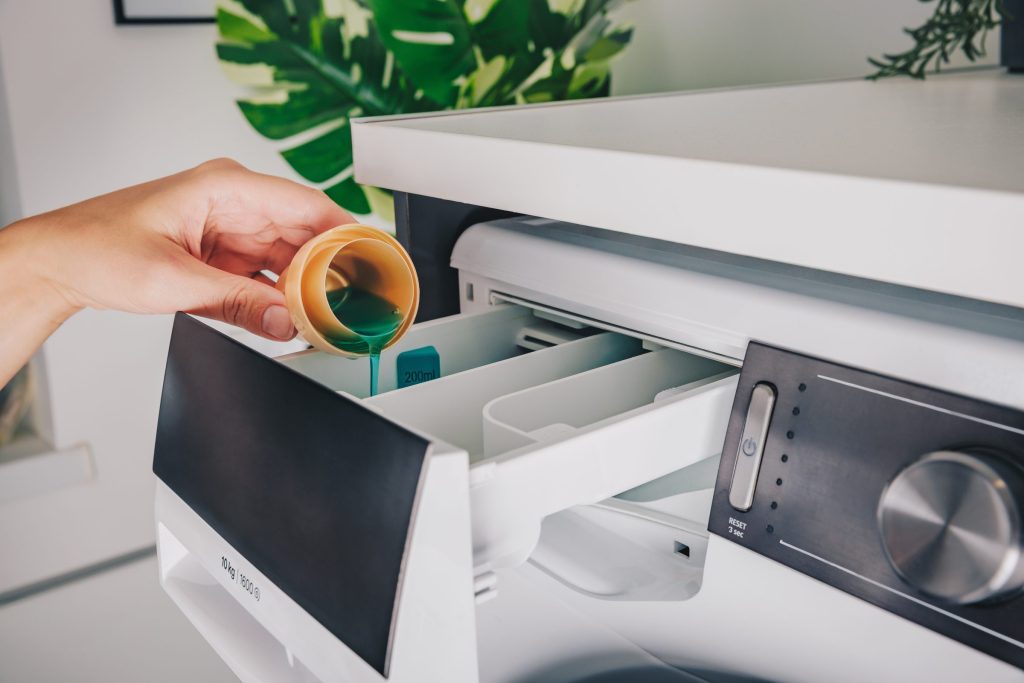
from $145 Maintenance & descaling
The visit that stops the other pages happening. In a city with hard water and a lot of heat, descaling a dishwasher and cleaning a condenser are not housekeeping — they are the two cheapest repairs on this site, done early.
- Dishwasher descaling before it costs the heat pump
- Condenser and coil cleaning
- Filters across the whole kitchen and laundry
-
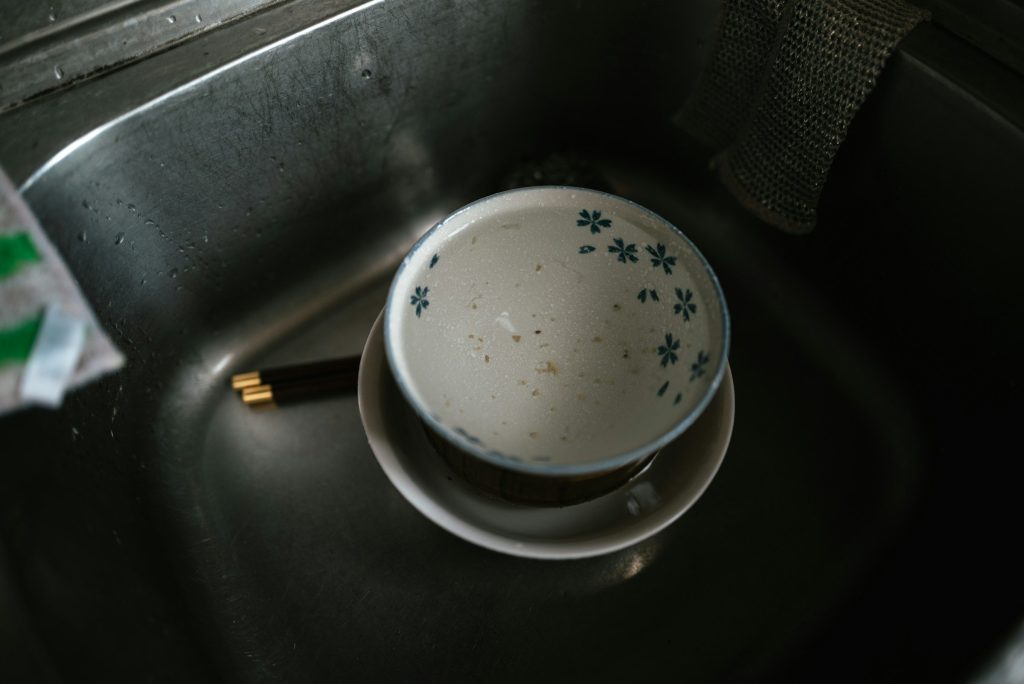
Film, grit or dishes still dirty Dishwasher not cleaning properly
Dishes coming out gritty, cloudy or with food still on them. In a hard-water city a good share of this is scale and detergent rather than a failed part — and the machine will eventually tell you so with a code of its own.
- Grit left in glasses and cups
- A white film on everything
- Food still on the lower rack
-
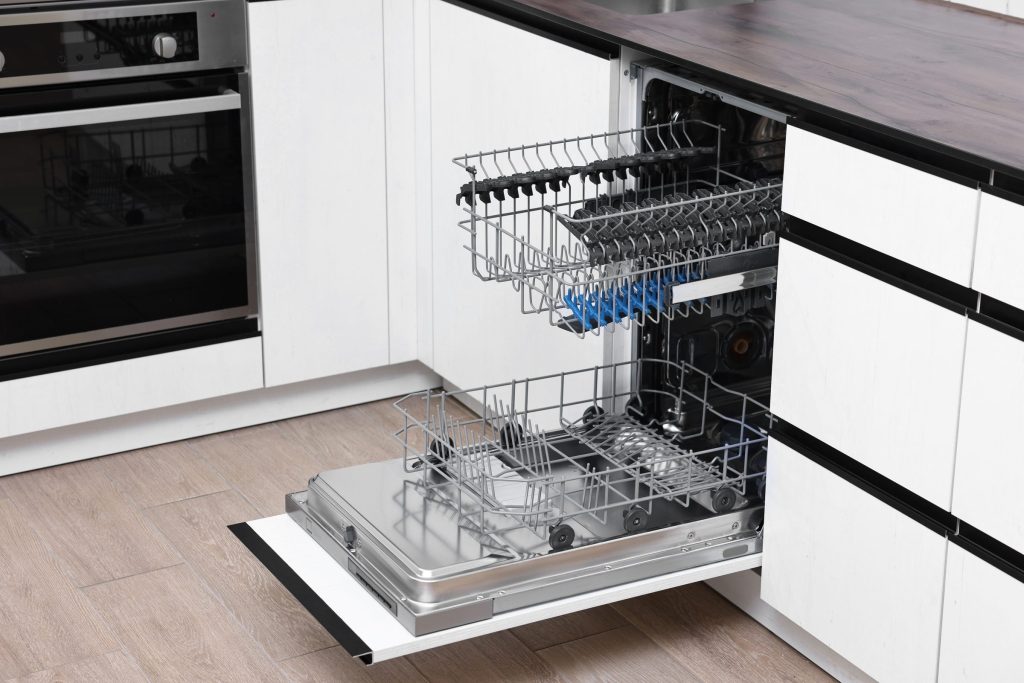
100 · 300 · 500 · 800 · Benchmark Dishwashers
The appliance this brand is known for, and the one we are called out to most. Bosch dishwashers dry with condensation rather than a heating element and protect themselves with a leak sensor in the base, so two of the commonest complaints about them are the design working as intended — and two more are not.
- Water left standing in the tub
- E15 and the leak protection tripping
- Plastics coming out wet

Questions people ask about this
Everybody online says to put a cup of vinegar on the top rack.
And it will not destroy your dishwasher on Tuesday. The concern is cumulative: acetic acid works on rubber, and the parts it reaches are the door seal, the sump gasket and the hose connections — the components whose entire job is keeping water inside the machine. Occasionally is fine; monthly for years is a slow trade against the machine.
Does it actually remove limescale?
Partially, on light deposits. On the scale that matters — the layer building on the heating surfaces inside the heat pump, which is what the machine's own code is about — a purpose-made descaler does considerably more, and it is formulated not to attack the seals while it does it.
What about vinegar in the rinse aid compartment?
We would not. That compartment doses into every cycle, which turns an occasional exposure into a permanent one, and it is exactly the arrangement the concern above describes.
Is it safe to mix with anything?
Not with bleach or any chlorinated cleaner — that combination releases chlorine gas and it has hurt people doing ordinary household cleaning. Vinegar goes in on its own or not at all.
So what should I use?
A dishwasher descaler on an empty cycle at the highest temperature, every three to four months in this water. If your machine has a salt reservoir, keep it topped up — the built-in softener is the thing actually designed for this problem and most machines here have never had salt in them.
Safety & Risks
More guides like this one
-
Mold on a Door Seal: Cleaning It, and Why It Comes Back Here
In this humidity it is a climate problem rather than a housekeeping failure, and it happens on a washer seal more often than a refrigerator one. How to clean it, what not to use, and the point at which the seal is finished.
Read more -
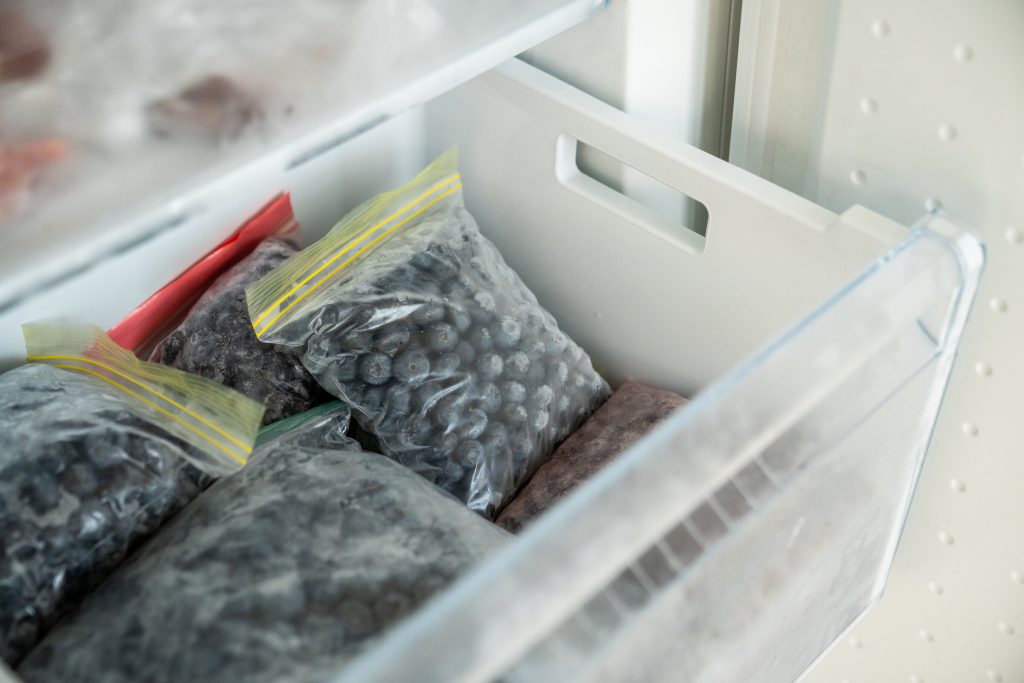
How Long Food Stays Safe When the Power Goes Out in South Florida
Four hours in the refrigerator, forty-eight in a full freezer — and both of those assume a house at room temperature, which is not what an August outage here looks like. What to do before, during and after.
Read more -

Can a Kitchen Appliance Start a Fire? The Honest Answer, and What Storm Season Changes
Rare, real, and concentrated in specific conditions — a surge-damaged board, a dryer with no airflow, a compressor relay. What actually raises the risk here, and the four warning signs that mean stop today.
Read more
Tell us the model number and what it is doing.
This article is based on:
- Official manufacturer documentation
- Internal repair procedures
- Technician repair history
- Company quality standards